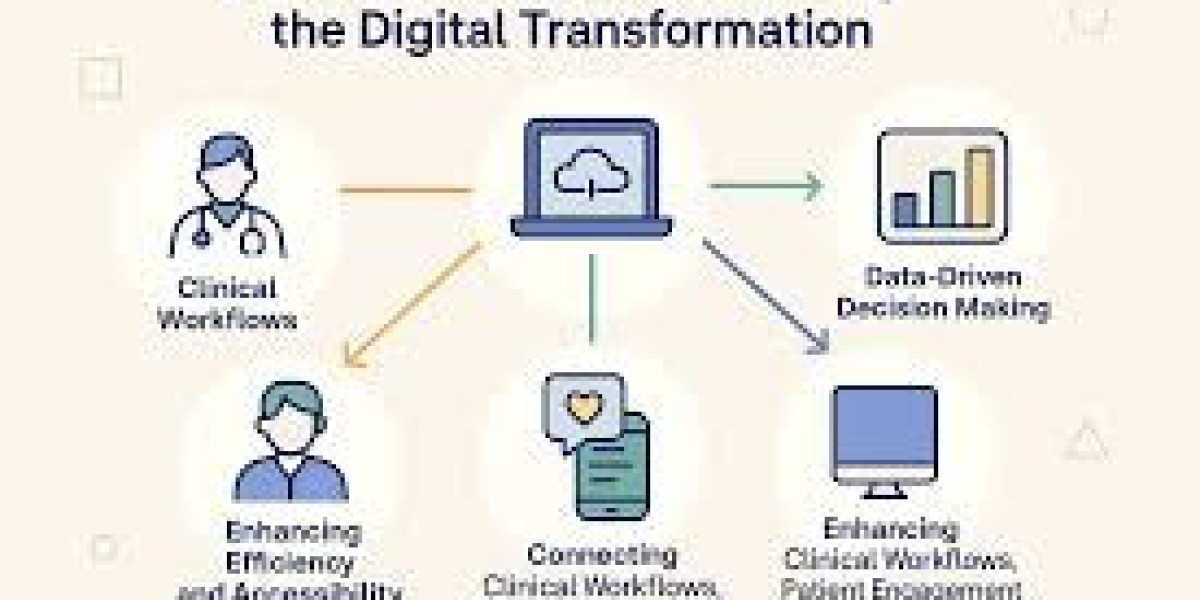

Digital transformation is no longer a future ambition for the healthcare industry—it is a present-day necessity. Hospitals, clinics, diagnostic centers, and health startups are under increasing pressure to modernize operations, improve patient outcomes, reduce costs, and ensure regulatory compliance. At the center of this transformation stands a critical partner: the healthcare software development company.
From electronic health records (EHRs) and AI-powered diagnostics to remote patient monitoring and virtual care platforms, healthcare technology is reshaping how care is delivered and managed. A specialized telemedicine application development company plays an equally important role in enabling virtual care ecosystems that meet modern patient expectations.
In this article, we’ll explore how healthcare software providers drive digital transformation, why their expertise matters, and what healthcare organizations should look for in a trusted technology partner.
Understanding Digital Transformation in Healthcare
Digital transformation in healthcare is more than simply replacing paper records with digital files. It involves reimagining workflows, enhancing clinical decision-making, integrating systems, improving patient engagement, and leveraging data for strategic growth.
Key objectives of digital transformation include:
- Improving patient outcomes
- Streamlining administrative processes
- Enhancing data accessibility
- Ensuring compliance and data security
- Increasing operational efficiency
- Expanding access to care through telehealth
Achieving these goals requires deep industry knowledge, technical expertise, and regulatory understanding—qualities that define a professional healthcare software development company.
Bridging Technology and Clinical Workflows
Healthcare environments are complex. Clinical workflows involve physicians, nurses, lab technicians, administrative staff, and patients. Any digital solution must seamlessly integrate into these workflows without disrupting care delivery.
A reliable healthcare software development company begins with discovery and analysis:
- Understanding existing workflows
- Identifying bottlenecks
- Consulting medical professionals
- Designing user-centric systems
Rather than forcing healthcare providers to adapt to rigid software, expert developers create solutions tailored to real-world clinical environments. This alignment is critical for adoption and long-term success.
Enabling Interoperability Across Systems
One of the biggest challenges in healthcare technology is interoperability. Hospitals often use multiple platforms—EHR systems, billing software, pharmacy tools, laboratory systems, and imaging solutions. Without integration, data becomes fragmented.
A healthcare software development company ensures systems can communicate through:
- API-driven integrations
- HL7 and FHIR standards
- Secure cloud-based data exchange
- Unified dashboards
Interoperability improves coordination of care, reduces duplicate tests, minimizes errors, and enhances patient safety.
Strengthening Data Security and Compliance
Healthcare data is highly sensitive. Patient records include personal identification details, medical histories, and financial information. A data breach can have severe legal and reputational consequences.
A professional healthcare software development company incorporates:
- End-to-end encryption
- Role-based access control
- Multi-factor authentication
- Secure hosting environments
- Audit trails and monitoring systems
Compliance with regulations such as HIPAA, GDPR, and regional healthcare laws is not optional. Developers must understand these frameworks and build systems accordingly. Security is not simply a feature—it is a responsibility.
Transforming Patient Experience Through Digital Platforms
Today’s patients expect convenience similar to other industries. Online appointment scheduling, digital prescriptions, mobile health apps, and real-time communication are becoming standard.
Healthcare software providers enhance patient engagement through:
- Mobile-friendly portals
- Secure messaging systems
- Automated reminders
- Online payment gateways
- Digital intake forms
A telemedicine application development company further expands access by creating virtual care platforms that allow patients to consult physicians remotely.
This patient-centric approach not only improves satisfaction but also strengthens loyalty and trust.
Driving the Growth of Telemedicine
Telehealth adoption accelerated dramatically in recent years. Virtual consultations are now an essential part of modern healthcare delivery.
A specialized telemedicine application development company builds secure, scalable platforms that include:
- High-quality video conferencing
- Real-time chat
- E-prescription integration
- Remote patient monitoring
- Digital billing systems
Beyond convenience, telemedicine reduces travel barriers, increases specialist access, and supports rural healthcare communities. By partnering with an experienced development company, healthcare providers can implement compliant and user-friendly telehealth solutions that integrate with existing systems.
Leveraging Data and Analytics for Smarter Decisions
Healthcare generates enormous volumes of data. However, without proper analytics tools, this data remains underutilized.
A forward-thinking healthcare software development company integrates:
- Real-time dashboards
- Predictive analytics
- Population health tracking
- Clinical performance metrics
- Revenue cycle analysis
With actionable insights, healthcare administrators can optimize staffing, manage resources efficiently, and improve patient outcomes. Clinicians benefit from evidence-based decision support tools that enhance diagnostic accuracy.
Integrating Artificial Intelligence and Automation
Artificial Intelligence (AI) is revolutionizing healthcare operations. From automated appointment scheduling to AI-assisted radiology analysis, innovation continues to accelerate.
An experienced healthcare software development company incorporates:
- AI-driven chatbots for patient communication
- Clinical decision support systems
- Predictive risk analysis
- Workflow automation tools
Automation reduces administrative burdens, minimizes human error, and frees up medical staff to focus on patient care.
Supporting Remote Patient Monitoring
Chronic disease management and preventive care increasingly rely on remote patient monitoring (RPM). Wearable devices and IoT-enabled tools allow real-time tracking of vital signs.
A healthcare software development company ensures RPM platforms are:
- Secure and compliant
- Integrated with EHR systems
- Equipped with alert mechanisms
- Scalable for growing patient populations
Remote monitoring reduces hospital readmissions, improves early detection of health issues, and supports long-term care strategies.
Enhancing Scalability Through Cloud Infrastructure
Digital transformation requires infrastructure that grows alongside the organization. Cloud-based systems offer flexibility, cost efficiency, and reliability.
A trusted healthcare software development company designs:
- Cloud-native architectures
- Microservices frameworks
- High-availability systems
- Disaster recovery plans
Scalable infrastructure ensures healthcare providers can expand services without system limitations.
Promoting Continuous Innovation
Healthcare technology is constantly evolving. Regulations change, cybersecurity threats increase, and patient expectations rise.
A reliable development partner provides:
- Ongoing maintenance
- Security updates
- Feature enhancements
- Regulatory compliance updates
Digital transformation is not a one-time project—it is an ongoing journey. Long-term collaboration ensures sustained growth and adaptability.
Building Trust Through Experience and Expertise
In healthcare, credibility matters. A professional healthcare software development company demonstrates expertise through:
- Industry-specific case studies
- Certified security practices
- Transparent development processes
- Client testimonials
- Proven compliance track records
Healthcare organizations should prioritize partners with real-world experience in clinical environments rather than generic software vendors.
Overcoming Common Digital Transformation Challenges
Digital transformation in healthcare comes with challenges:
- Resistance to change
- Data migration complexities
- Integration difficulties
- Budget constraints
- Compliance concerns
An experienced healthcare software development company mitigates these risks by:
- Conducting thorough requirement analysis
- Implementing phased rollouts
- Providing staff training
- Offering post-launch support
Similarly, a telemedicine application development company ensures seamless onboarding for both physicians and patients, reducing adoption barriers.
Why the Right Partner Matters
Choosing the wrong technology partner can result in delayed projects, compliance failures, security vulnerabilities, and financial losses.
The right healthcare software development company acts as:
- A strategic advisor
- A compliance expert
- A technology innovator
- A long-term partner
Healthcare leaders must evaluate potential vendors carefully, assessing technical capability, industry knowledge, and commitment to security.
The Future of Digital Healthcare
The next wave of innovation will include:
- AI-powered diagnostics
- Blockchain-secured health records
- Personalized medicine platforms
- Advanced telehealth ecosystems
- Smart hospital automation
Healthcare providers that invest in strong digital foundations today will be better positioned to adopt future technologies.
A specialized telemedicine application development company will continue to play a crucial role in expanding access to care, while healthcare software developers will refine systems that enhance operational efficiency and patient safety.
Final Thoughts
Digital transformation in healthcare is not simply about adopting new technology—it is about improving lives. It demands secure systems, seamless integration, regulatory compliance, and patient-centered design.
A professional healthcare software development company serves as the backbone of this transformation, delivering tailored solutions that modernize healthcare delivery. Meanwhile, a trusted telemedicine application development company extends care beyond physical boundaries, ensuring accessibility and convenience for patients everywhere.