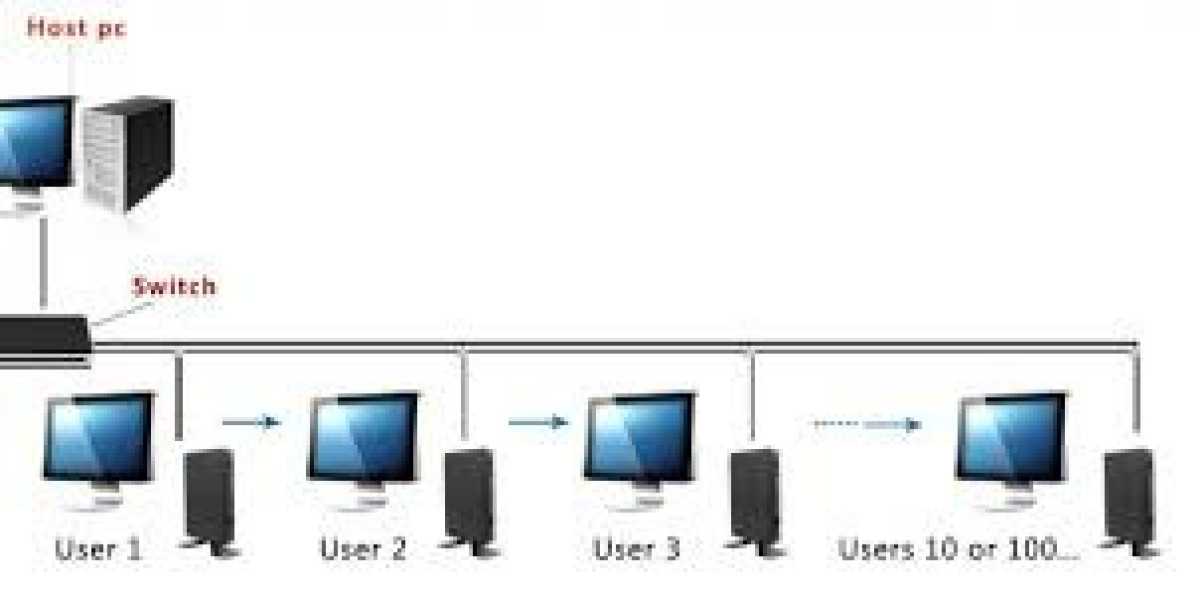

The Thin Client Market Size is witnessing significant growth as organizations increasingly adopt centralized computing solutions to enhance operational efficiency and reduce IT costs. Thin clients, as lightweight computing devices, are reshaping the way enterprises manage their IT infrastructure by offering secure, energy-efficient alternatives to traditional desktops. These devices enable seamless access to virtual desktop environments and cloud-based applications, making them indispensable for modern workplaces.
Rising Adoption of Virtualized Computing Solutions
The surge in remote work, digital transformation initiatives, and cloud computing adoption has fueled the demand for virtual desktop clients. Thin clients provide a reliable and secure way to connect employees to centralized servers while minimizing hardware maintenance. Energy-efficient client devices also help organizations reduce their carbon footprint, making them an attractive solution for companies focused on sustainability.
Moreover, businesses are increasingly leveraging cloud access terminals to facilitate flexible and scalable computing across multiple locations. This allows IT departments to streamline software updates, manage access rights, and monitor network security from a central point, all while maintaining high performance across networked workstations.
Integration with Emerging Technology Ecosystems
The Thin Client Market is closely linked with emerging technology trends. For instance, the Us 5G Iot Market is enhancing connectivity for thin client devices, enabling low-latency access to cloud applications and IoT-enabled enterprise environments. High-speed networks allow thin clients to handle more complex workloads while maintaining efficiency and reliability.
In addition, financial and enterprise auditing solutions increasingly rely on secure remote access platforms, which drives growth in the Us Audit Software Market. Thin clients support these secure environments by ensuring that sensitive data remains on centralized servers, mitigating the risk of data breaches in distributed workforces.
Advantages of Thin Clients in Modern IT Environments
Thin clients are renowned for their compact form factor and minimal energy consumption. Networked workstations connected through thin clients can significantly lower electricity costs compared to traditional desktops. These devices are also easier to deploy and manage, which reduces IT overhead and operational complexity.
Cloud access terminals further enhance collaboration and productivity, allowing multiple users to access shared applications and data without compromising performance. Additionally, thin clients simplify endpoint security management by limiting local storage and directing all critical processes to centralized servers.
Future Prospects and Market Outlook
The Thin Client Market is poised for sustained growth as organizations continue to seek efficient, secure, and scalable computing solutions. Lightweight computing devices are becoming increasingly popular in sectors such as education, healthcare, finance, and government, where centralized IT management is crucial. Virtual desktop clients and energy-efficient client devices are expected to drive adoption, supporting digital transformation and remote work initiatives across industries.
Investments in high-speed connectivity, cloud infrastructure, and next-generation thin client hardware will further boost market expansion. As enterprises prioritize cost reduction, security, and sustainability, thin clients are positioned to become a core component of modern IT ecosystems.
Summary
The Thin Client Market Size is growing rapidly, driven by the need for secure, centralized computing solutions. Adoption of virtual desktop clients, cloud access terminals, and energy-efficient client devices is increasing across sectors, supported by emerging technology markets such as 5G IoT and audit software. With advantages including low energy consumption, simplified IT management, and secure networked workstations, thin clients are becoming essential for modern enterprises.
Meta Description
Explore the Thin Client Market Size, highlighting lightweight computing devices, virtual desktop clients, cloud access terminals, and the role of networked workstations in driving enterprise efficiency and sustainability.
FAQs
1. What are thin clients and how do they work?
Thin clients are lightweight computing devices that connect to centralized servers to run applications and access data, reducing the need for powerful local hardware.
2. What are the benefits of thin clients in enterprises?
They offer energy efficiency, simplified IT management, enhanced security, and seamless access to virtual desktop environments and cloud applications.
3. Which sectors are driving the Thin Client Market?
Key sectors include healthcare, finance, education, and government, where centralized IT management and secure remote access are critical.
➤➤Explore Market Research Future- Related Ongoing Coverage In Semiconductor Industry:
India Semiconductor Production Equipment Market
Germany Semiconductor Production Equipment Market
France Semiconductor Production Equipment Market