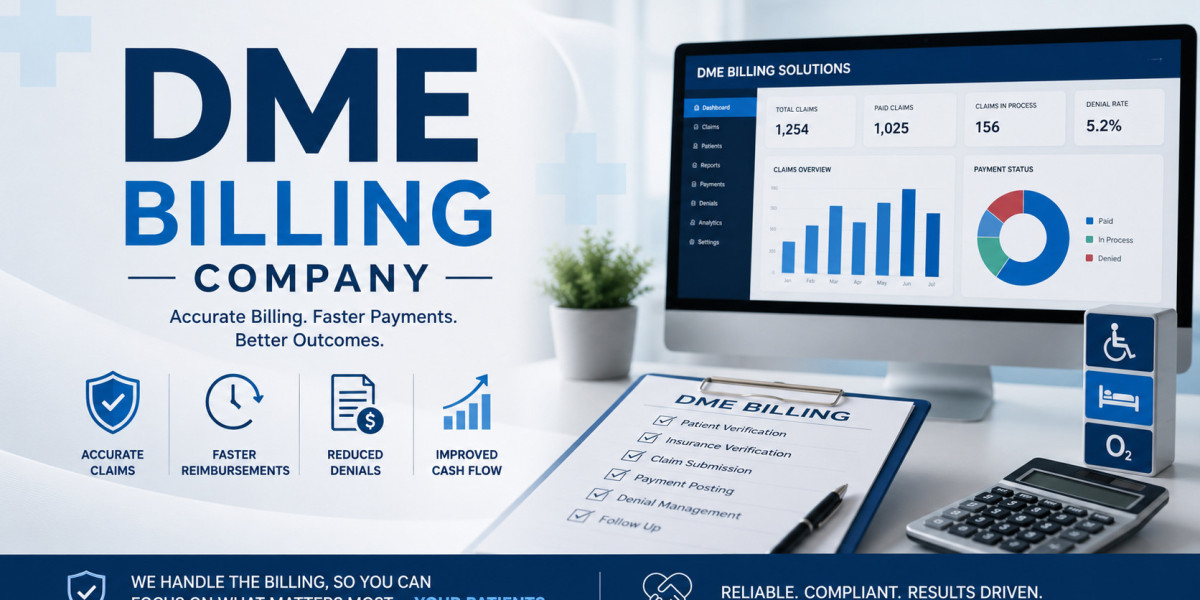

The durable medical equipment industry plays a major role in patient care. From wheelchairs and oxygen equipment to CPAP machines and hospital beds, DME providers help patients manage long-term health conditions and recovery at home. However, behind every successful DME provider is a strong billing process that keeps cash flow stable and claims moving smoothly.
Managing insurance claims for durable medical equipment is often more complicated than standard medical billing. Frequent policy updates, prior authorization requirements, HCPCS coding, and strict compliance rules can create delays and denials if not handled correctly. That is why many healthcare providers choose to work with a reliable durable medical equipment DME billing company to streamline operations and improve reimbursements.
In this blog, we will explore why DME billing requires specialized expertise, the challenges providers face, and how outsourcing billing services can help healthcare businesses grow efficiently.
Understanding Durable Medical Equipment Billing
Durable Medical Equipment (DME) billing refers to the process of submitting claims for medical equipment used in patient care. These items are generally prescribed by physicians for home use and must meet insurance eligibility requirements.
Some common DME products include:
- Wheelchairs
- Walkers
- Oxygen equipment
- CPAP and BiPAP machines
- Hospital beds
- Orthopedic braces
- Nebulizers
- Diabetic supplies
Unlike regular physician billing, DME billing involves additional documentation, product verification, rental tracking, and payer-specific compliance rules. Insurance companies often require detailed proof of medical necessity before approving claims.
A professional durable medical equipment DME billing company understands these complex requirements and helps providers avoid costly billing errors.
Common Challenges in DME Billing
Many healthcare providers struggle with DME billing because the process involves multiple administrative and compliance-related steps. Even a small coding error or missing document can lead to denied claims and delayed payments.
Frequent Claim Denials
DME claims are highly scrutinized by insurance companies. Missing physician signatures, incomplete documentation, or incorrect modifiers can result in denials.
Prior Authorization Delays
Many DME products require prior authorization before equipment is delivered to patients. Failure to obtain approval can lead to rejected claims and revenue loss.
Complex HCPCS Coding
DME billing relies heavily on HCPCS Level II codes and modifiers. Coding mistakes can trigger audits or payment reductions.
Medicare and Medicaid Compliance
Government payers have strict billing guidelines for DME services. Providers must stay updated with changing rules to avoid penalties.
Rental vs. Purchase Billing
Some equipment is billed as a rental while others are billed as purchases. Tracking billing cycles accurately is essential for proper reimbursement.
These challenges are one of the biggest reasons healthcare providers outsource their billing processes to an experienced DME billing company.
Benefits of Hiring a Durable Medical Equipment DME Billing Company
Outsourcing billing services can significantly improve operational efficiency for DME providers. A specialized billing company brings industry knowledge, trained professionals, and advanced billing technology to manage the revenue cycle more effectively.
Improved Claim Accuracy
Professional billing teams understand payer guidelines and documentation requirements. This reduces coding errors and improves first-pass claim acceptance rates.
Faster Reimbursements
An experienced DME billing company follows up on claims regularly, reducing delays and improving payment turnaround times.
Reduced Administrative Burden
Handling billing internally can overwhelm staff members. Outsourcing allows healthcare providers to focus more on patient care instead of administrative tasks.
Better Denial Management
Billing specialists analyze denial patterns, correct claim issues quickly, and resubmit claims efficiently to maximize collections.
Compliance Support
A trusted billing partner stays updated with Medicare, Medicaid, and commercial insurance regulations to ensure compliance.
Scalable Billing Solutions
As DME businesses grow, billing needs also increase. Outsourcing provides flexibility without the need to hire and train additional in-house staff.
Partnering with the right durable medical equipment DME billing company can help healthcare providers improve revenue while minimizing billing headaches.
Key Features to Look for in a DME Billing Company
Not all medical billing companies specialize in DME services. Choosing the right partner requires careful evaluation of their expertise, technology, and support capabilities.
Industry Experience
Look for a company with proven experience handling DME billing. Specialized knowledge is critical for navigating payer requirements and coding complexities.
Certified Billing Experts
Professional coders and billing specialists should have expertise in HCPCS coding, modifiers, and DME documentation standards.
Advanced Billing Software
Modern billing systems help automate claims processing, eligibility verification, payment posting, and reporting.
Transparent Reporting
A good billing company provides detailed financial reports and regular updates about claim status, collections, and denials.
Strong Denial Resolution Process
Ask how the company handles denied claims and appeals. Effective denial management directly impacts revenue performance.
HIPAA Compliance
Data security is essential in healthcare. Ensure the billing company follows HIPAA regulations and maintains secure patient information systems.
Personalized Customer Support
Responsive communication is important when resolving billing issues or payer concerns quickly.
Selecting a billing partner based on these factors can make a significant difference in your practice’s financial stability.
How Outsourcing DME Billing Improves Revenue Cycle Management
Revenue cycle management is one of the most important aspects of healthcare operations. Inefficient billing processes can lead to delayed payments, cash flow problems, and increased claim denials.
Outsourcing DME billing helps streamline every stage of the revenue cycle, including:
- Patient eligibility verification
- Prior authorization processing
- Accurate claim submission
- Payment posting
- Accounts receivable follow-up
- Denial management
- Compliance monitoring
By improving workflow efficiency, providers can reduce billing backlogs and maintain healthier cash flow.
Professional billing companies also use analytics and reporting tools to identify revenue leakage and improve collection strategies. This level of insight helps DME providers make better operational decisions.
For growing healthcare businesses, outsourcing billing is often more cost-effective than maintaining a large in-house billing department.
FAQ About Durable Medical Equipment DME Billing Company
What does a durable medical equipment DME billing company do?
A DME billing company handles the entire billing process for durable medical equipment providers. This includes claim submission, coding, denial management, insurance verification, payment posting, and compliance monitoring.
Why is DME billing more complicated than regular medical billing?
DME billing involves strict documentation requirements, HCPCS coding, prior authorizations, and payer-specific guidelines. Insurance companies closely review DME claims before approving reimbursements.
Can outsourcing DME billing reduce claim denials?
Yes. Experienced billing companies use trained coders and verification processes to minimize billing errors and improve claim acceptance rates.
What types of equipment are included in DME billing?
Common equipment includes wheelchairs, oxygen supplies, CPAP machines, hospital beds, walkers, braces, and diabetic testing supplies.
How do DME billing companies improve cash flow?
They speed up claims processing, reduce denials, follow up on unpaid claims, and improve reimbursement timelines.
Is DME billing outsourcing cost-effective?
For many providers, outsourcing reduces staffing costs, training expenses, software investments, and administrative workload while improving collections.
Conclusion
DME billing is a specialized area of healthcare revenue cycle management that requires accuracy, compliance knowledge, and constant attention to payer requirements. Errors in coding, documentation, or authorization can quickly lead to denied claims and lost revenue.
Working with an experienced durable medical equipment DME billing company allows healthcare providers to simplify billing operations, improve reimbursements, and focus more on delivering quality patient care. From claim submission to denial management, a professional billing partner can help optimize every step of the revenue cycle.
If your healthcare organization is looking for reliable and efficient billing support, 247 Medical Billing Services provides comprehensive DME billing solutions designed to improve collections, reduce denials, and strengthen your financial performance.